
Why Your Engine Overheats in Vermont Summers (And How to Stop It)
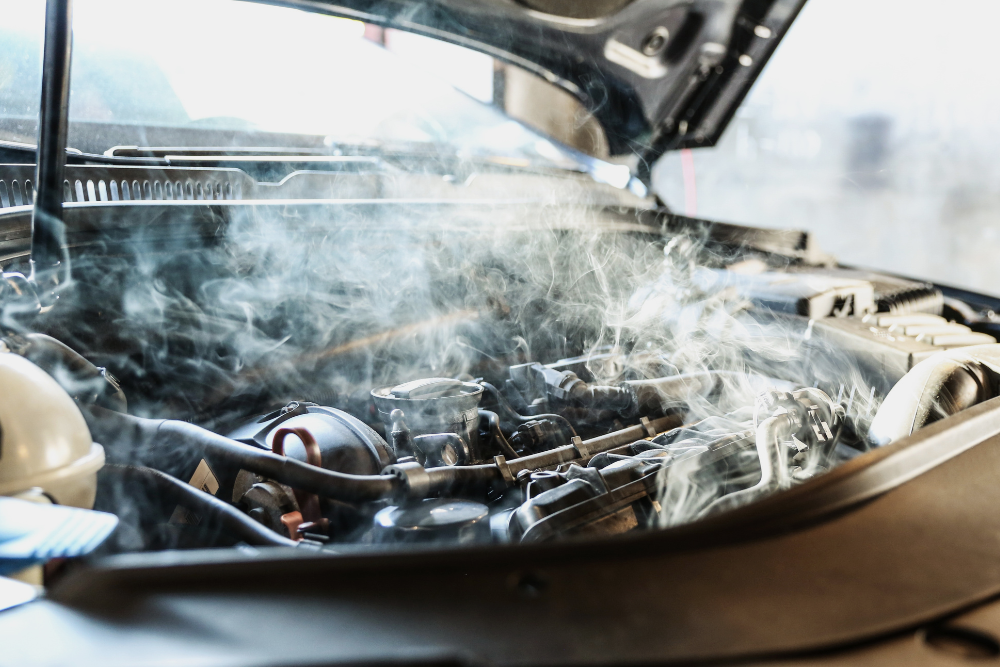
TL;DR: Engine overheating is one of the most preventable summer breakdowns out there, and one of the most expensive when it gets ignored. The usual culprits are low or degraded coolant, a stuck thermostat, a clogged radiator, or worn hoses. Your car will usually warn you before things get serious. This guide walks you through what to watch for, what's actually happening under the hood, and how to stay ahead of it before Vermont's warm weather finds your weak spot first.
Demeny’s Corner: My First Overheating Scare
I remember a hot summer’s day, way back in the early 2000s when I was young and happy and carefree. Back when cell phones weren't yet a thing. Back when rent was cheap, gas was cheap, and my jobs paid next to nothing. Back when the idea of spending a penny more on my car than what a simple oil change would cost was absolutely ludicrous to me. I would laugh in the face of the lube tech that told me I needed an air filter, or a transmission fluid flush, or a cooling system service. I didn’t have money for those scams! My car was totally fine! I just wanted my oil changed and nothing else!
On this day, I was driving up that hill on Williston Road, and I noticed that my engine gauge was showing really hot! I turned off my radio (because everybody knows, music makes all the car problems worse) and tried not to panic. I decided to pull over and let it cool down, so I turned the car off on the side of the road up by where Pete’s RV is, and waited.
Like I said, this was before I had a cell phone, so I didn’t have many options. I could sit in my car, wait for it to cool down and hope that time would magically solve the problem. Or, I could abandon my car and trek down the road, stopping in at every business and beg them for help or the use of their phone. To call who? I have no idea. I didn’t have AAA, my parents lived many hundreds of miles away, and all of my friends were just as hopeless as I was when it came to cars.
I decided that time and magic was my best option.
So I turned the radio back on and waited about 10 minutes. When I started my car THE ENGINE TEMP WAS BACK IN THE MIDDLE ZONE!!!!!!! YAYYYYY! I pulled back into traffic, breathing a huge sigh of relief, and I was on my merry way.
Or so I thought.
I got about 100 yards down the road and my engine heat shot right back up to Way Too Hot. I tried turning the car off again and waiting longer this time. I got the same results.
I hate to tell you this, but that’s all I remember. The panic and stress of being suddenly stranded by myself (and maybe having my car be dead forever) has pushed all other memories of this day out of my head. Having a breakdown is one of the most stressful things in life. It’s possible that I called a tow truck and had it brought to a shop where they fixed me right up, but it’s a lot more likely, at that point in my life, that I probably limped my way to a gas station where I could buy a gallon of coolant and fill my radiator over and over and over until I could save enough money to fix what had broken. I know that was my approach when I had a leaking transmission on another car around that time, so I’d bet I was equally uncaring of the damage I was doing to my engine and to the environment with this problem too.
But it was breakdowns like this (and believe me, there were many of them), that made me want to become a technician. If I was a tech, I would know what to do and how to fix the problem myself. A few years later, when I did become a tech, what I learned was that my life would have been so much easier and cheaper and safer if I had just listened to those lube techs when they told me that I needed to do maintenance on the rest of my car too! Like changing the coolant, for example. If I had, so many of my breakdowns would never have happened, and I wouldn’t have thrown away so much of my money on big fixes and new (old) cars.
Heat Is Harder on Your Engine Than Cold Ever Was
Most people assume winter is the roughest season for vehicles. But here's the thing: cold slows your engine down; heat pushes it to its limits.
After months of temperature swings, road salt, and hard starts, your cooling system is already carrying some wear into summer (especially if you’ve been really good at ignoring for years, like I did). Coolant degrades. Hoses get brittle. Radiators collect grime. Add a hot July afternoon and stop-and-go traffic on Williston Road, and a cooling system that was "totally fine" starts becoming a problem.
What the Cooling System Is Up Against
Every time your engine runs, it produces serious heat. Your cooling system's entire job is to grab that heat and move it out before anything gets damaged. Coolant flows from the radiator through the engine, soaks up heat, loops back to cool down, and does it all over again.
When any part of that loop fails, heat has nowhere to go, and heat with nowhere to go turns into damaged engine parts and expensive repairs nobody ever wanted.
Your Car Is Trying to Tell You Something (mine was). Here's What to Listen For.
Most engines don't just overheat out of nowhere. They give you signals first.
Temperature gauge climbing toward red: Don't hope it comes back down. It's not just telling you the engine is hot, it’s telling you something else is very wrong.
Steam (white smoke) rising from under the hood: Pull over safely, right now! This is not a "drive a little further" situation. You are actively losing coolant (that’s the smoke) and if you push it, you’ll probably hurt your engine.
Sweet or chemical smell in the cabin: Coolant has a very distinct smell. What does sweet smell like, you ask? Coolant! I promise, you’ll know it when you smell it. If you're catching it while driving, there's likely a leak.
Low coolant warning light: Take it seriously every single time.
Heater blowing cold when it should be hot: Often a sign that coolant levels are lower than they should be. A lot of overheating engines are found this way in the winter.
Catching any of these early is almost always a much shorter conversation with your auto shop than the one you have after ignoring them.
The Parts Most Likely Behind an Overheating Engine
Low or Degraded Coolant
Coolant loses its ability to transfer heat over time and can turn acidic, slowly corroding the components it's supposed to protect. And low coolant from a slow leak is just as much of a problem as coolant that's worn out from age.
A Stuck Thermostat
The thermostat controls when coolant flows to the radiator. It stays closed when your engine is cold so that it can warm up faster, and it opens as soon as the engine needs to cool down. When it sticks closed, nothing circulates, and heat builds fast. A stuck thermostat can look identical to a much more serious problem, but a good technician has the knowledge and tools to figure out the difference between the two.
Radiator Wear and Buildup
Vermont winters pack radiators with road salt and grime. Summers pack them with debris, mud and bug bodies. This all clogs up the cooling fins on your radiator, and can also accelerate corrosion of those fins and cooling lines they are attached to. A clogged or corroded radiator can't release heat properly, and we know what unreleased heat can do to your engine (and the rest of your cooling system). Not only that, but the corrosion can cause leaks to develop, while all the debris can mask them. Small leaks that may develop are pretty easy for you to miss until they're not so small anymore, and they’re causing big problems.
Worn Hoses or a Failing Water Pump
Coolant hoses (made of rubber) crack and weaken over time (just like rubber bands do) from repeated heat and pressure cycles. Eventually, the heat and pressure in the hose gets to be too much for the old rubber and the hose can split or blow. And then you’ve suddenly lost all of your coolant.
Your water pump does exactly what it sounds like: it pumps the water (your coolant). It keeps it moving throughout your engine and cooling system. A failing water pump slows circulation throughout the whole system. Without the coolant circulating, heat starts to build up, fast, and as we know, unreleased heat causes disasters.
Both are worth checking. If your timing belt service is coming up, it’s an especially good time to change the water pump, and the hoses with it, because on a lot of vehicles, the water pump lives behind the timing belt.
If Your Temperature Gauge Starts Climbing, Do This
Stay calm and move through these steps quickly.
Kill the A/C immediately. Less load on the engine buys you a little time.
Turn the heater on full blast. It pulls heat away from the engine and into the cabin. It helps.
Pull over as soon as it's safe. Don't push through it hoping the gauge magically drops!
Shut the engine off and let it cool completely. Do not open the radiator cap while it's hot. The system is pressurized and you will get burned.
Call for help. A tow is a lot cheaper than driving an overheating engine. Driving on it runs the risk of damaging the engine to the point of needing replacement.
Once the engine has cooled, don't try to diagnose it yourself. Even if everything looks fine from the outside, an overheating engine needs a professional eye before it goes back on the road. Call Girlington Garage and let us figure out what happened.
Getting Your Cooling System Checked at Girlington Garage in Burlington, VT
At Girlington Garage in South Burlington, VT, a cooling system check means looking at the whole picture. Our team inspects coolant condition, checks hoses and clamps, tests the thermostat, and evaluates the radiator for wear or leaks. Then we walk you through exactly what we found in plain language, no jargon, no pressure.
A big part of every visit is understanding you, not just your car. What do you use it for? How long are you planning to keep it? Is this repair worth it, or is it time for a bigger conversation about your options? Girlington helps you think it through and gives you everything you need to make the right call. The decision is always yours.
Ready to get ahead of it? Call or text Girlington Garage at 802-247-7917, or stop by at 2 Harbor View Rd, South Burlington, VT 05403. The main number is a text number, so reach out however works best.
Why Burlington Area Drivers Keep Coming Back for Engine Repair
Girlington Garage has built a reputation in the Burlington community for being genuinely different, and the people who come in once tend to keep coming back. From drivers near UVM, Champlain College, and Saint Michael's to longtime Vermont residents, the word has spread because the experience matches the promise.
It's one of the few shops in the state that has always been intentional about welcoming women and the LGBTQ+ community, while making sure every single person who walks in feels respected and at home.
Here's what that looks like in practice:
A space where everyone belongs: Inclusion isn't a policy here. It's just who we are.
Education over pressure: Ask as many questions as you want. We’ll answer every one.
Your call, always: We help you think through your options based on your situation and your goals. The decision is always yours.
3-year/36,000-mile warranty on parts and labor. Every repair, every time.
Premium parts on every job. No shortcuts.
Complimentary comprehensive vehicle evaluation on every visit. You'll always leave knowing the full picture.
Loaner cars and contactless drop-off. Because life doesn't pause for a repair appointment.
FAQs About Engine Overheating and Cooling System Repair in Burlington, VT
What causes an engine to overheat in summer?
Engine overheating in summer is most commonly caused by low or degraded coolant, a failing thermostat, a clogged radiator, or worn coolant hoses. Higher temperatures put more demand on the cooling system, making it easier for a weakened system to fall behind. Regular cooling system service before summer helps catch these issues early.
How do I know if my cooling system is failing?
The most common signs include a rising temperature gauge, steam from under the hood, a sweet or chemical smell in the cabin, the low coolant warning light, or your heater blowing cold when set to hot. Any one of these is a reason to have the system looked at professionally.
What should I do if my engine temperature rises?
Turn off the A/C, switch the heater on full blast to draw heat away from the engine, and pull over safely as soon as possible. Shut the engine off and let it cool completely before checking anything. Never open the radiator cap while the engine is still hot.
Can low coolant cause overheating?
Yes, and it's one of the most common causes. Without enough coolant moving through the system, heat builds up faster than the radiator can release it. Low coolant almost always points to a leak that needs to be found and repaired.
Where can I fix an overheating car in Burlington?
Girlington Garage at 2 Harbor View Rd, South Burlington, VT provides cooling system inspections, radiator service, thermostat replacement, hose inspection, and engine repair for overheating issues. The team serves drivers throughout Burlington, Williston, Shelburne, Winooski, and the surrounding Vermont communities.
Schedule Your Engine Overheating Repair in Burlington, VT Today
Summer in Vermont is too short to spend any of it waiting on a tow truck. Don't let a cooling system that needed attention a few oil changes ago turn into a much bigger repair.
Looking for overheating engine repair near Burlington, VT? Visit Girlington Garage at 2 Harbor View Rd, South Burlington, VT 05403, or call and text 802-247-7917 to get on the schedule. Proudly serving Burlington, South Burlington, Williston, Shelburne, Winooski, Colchester, Richmond, Hinesburg, and Essex, VT.